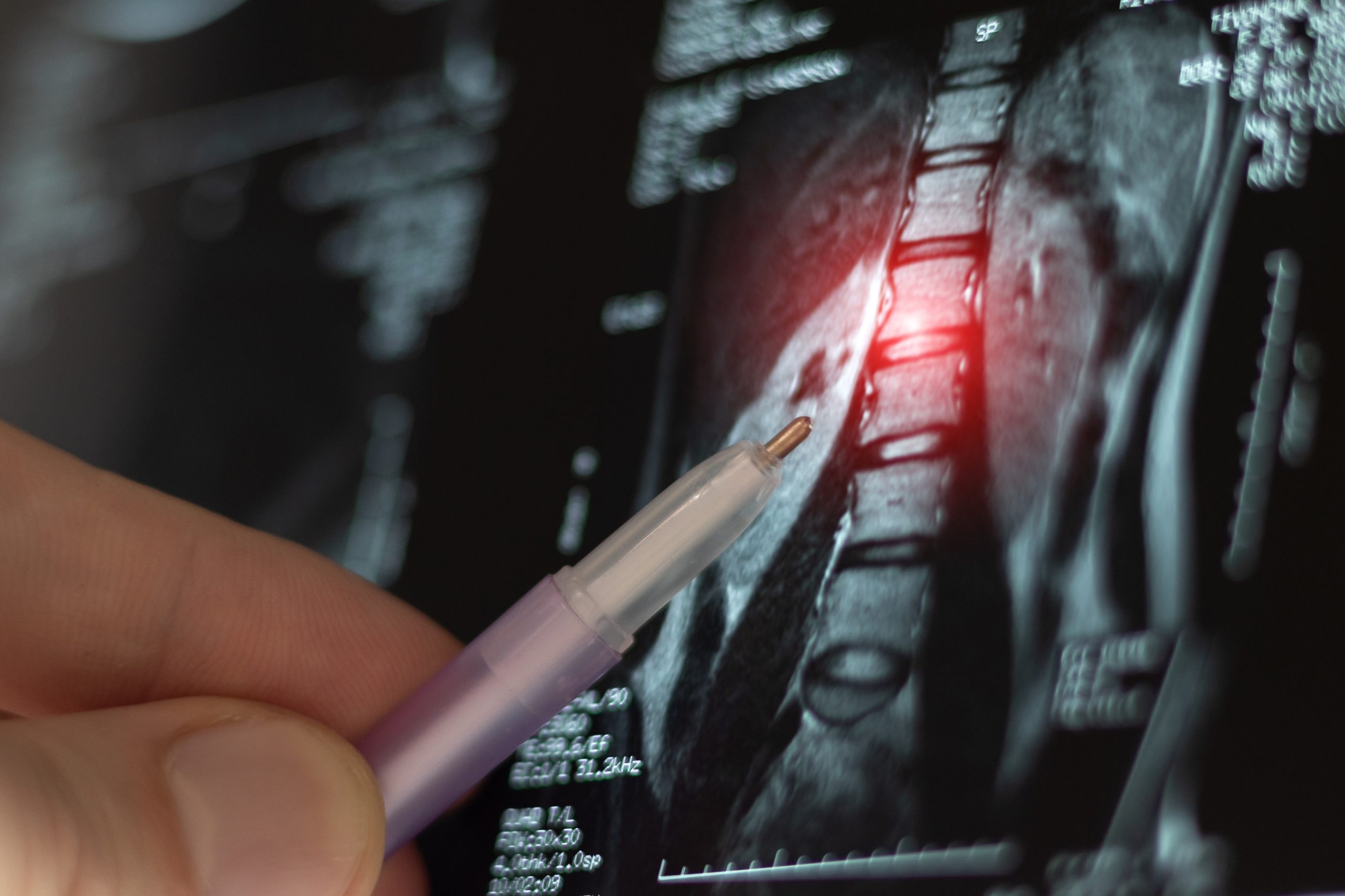

Disc replacement is used in specific situations where a damaged disc is causing nerve irritation or contributing to loss of mobility. The goal is to remove the diseased disc, relieve pressure on nearby nerves, and place an artificial disc that preserves motion at the treated level. This approach differs from fusion, which eliminates movement at the affected segment. Because disc replacement maintains natural motion, it is suited for certain patterns of degeneration that involve a single level of the spine.
One of the most frequent indications is a herniated disc that has not improved with nonoperative care. When the disc loses height or its outer layer weakens, the inner material can press on a nerve root. Removing the disc and replacing it with a motion preserving implant can relieve the pressure while maintaining the flexibility of the neck or lower back. Cervical herniated discs are the most common scenario for this technique, though some lumbar cases may qualify as well.
Degenerative disc disease is another condition that may be treated with disc replacement. As the disc wears down, mobility can decrease and pain may increase due to inflammation and mechanical strain. If the problem is isolated to a single level and the surrounding joints remain healthy, disc replacement can restore spacing between the vertebrae and allow controlled movement. This combination supports long term comfort and helps protect adjacent levels from added stress.
Additional Conditions That May Qualify
Disc replacement may also be considered for cases involving nerve compression from bone spurs or disc collapse, provided the facet joints are not severely arthritic. Preserving these joints is important because they work together with the artificial disc to guide motion. Conditions involving spinal cord pressure in the neck can sometimes be addressed with disc replacement if the compression is created by the disc itself rather than broader structural problems.
Not every condition is suited for this technique. Multilevel degeneration, instability, advanced arthritis, and certain deformities are better managed with other procedures. Careful evaluation with imaging studies is essential to determine whether the treated segment has the stability and joint health needed for a successful disc replacement.
When matched to the right anatomy and diagnosis, disc replacement offers relief from nerve compression while maintaining natural motion. Many individuals experience durable improvement and a reduced likelihood of strain on nearby levels which supports long term function and spinal balance.